Victor 20122 – Carl T. Sprague – 1926

Texas boy Carl T. Sprague was among the first cowboy singers to make records, with his first session taking place in 1925.  He also holds the uncommon distinction of being my favorite cowboy singer.

Sprague as pictured in Victor’s 1930 catalog of Old Familiar Tunes.

Carl Tyler Sprague was born in Brazoria County, Texas, near the town of Manvel, on May 10, 1895.  His family was involved in the thriving cattle business, through which the young Sprague learned the traditional songs of the cowboy.  He attended Texas A&M to study agriculture, but was interrupted by the First World War, in which he served as a member of the U.S. Army Signal Corps.  After the war’s end, he returned to Texas A&M, and graduated with a degree in animal husbandry.  After graduating, he was employed as an athletic instructor at the university, a position which he held from 1922 until 1937, and acquired the nickname “Doc”.  Following the success of Vernon Dalhart’s “mountaineer’s songs”, Sprague wrote to the Victor Talking Machine Company expressing interest having them record some of his cowboy songs.  They apparently obliged, and Sprague traveled to Camden, New Jersey to make two test recordings.  Victor must’ve liked them, because two months later, he returned to record a series of ten sides in sessions on the third, fourth, and fifth of August, 1925, half of which were issued.  His first record, “When the Work’s All Done This Fall”, became quite a hit, and proved that people were interested in hearing the song of the cowboy.  That was followed by a further three sessions over the following three years in Camden, Savannah, Georgia, and Dallas, producing eighteen more sides, all of which were released.  In spite of his records’ success, singing was but a hobby for Sprague, and he did not pursue a music career outside of record-making.  He left his post at Texas A&M in 1937 and opened a store in Bryan, and when the Second World War rolled in, he served once again, as a recruiter.  The folk revival of the 1960s brought Sprague back into music, and he played and lectured around the country, and recorded two LPs in 1972 and ’74.  Carl T. Sprague died on February 21, 1979 in Bryan, Texas, where he had called home since 1920.

Victor 20122 was recorded in Camden, New Jersey on June 22, 1926, at Sprague’s second series of sessions.  The record was released in December of the same year, and remained in the catalog all the way until 1944, perhaps indicating it was Sprague’s greatest success.  Sprague is accompanied by two fiddles played by H.J. McKenzie and C.R. Dockum.

One of the archetypal cowboy songs, the stark, bleak, and sorrowful “O Bury Me Not On the Lone Prairie (The Dying Cowboy)” is a mesmerizing, repetitive, and minimalistic piece, with Sprague’s vocal backed by the beat of his guitar and the forlorn fiddle’s croon.  The song has been featured in recent years on Dust-to-Digital’s evocative multimedia collection I Listen to the Wind That Obliterates My Traces: Music in Vernacular Photographs (1880-1955).

O Bury Me Not On the Lone Prairie (The Dying Cowboy), recorded June 22, 1926 by Carl T. Sprague.

On “B”, Sprague sings “The Cowboy’s Dream”, a less depressing and rather entrancing melody.  It also provides a demonstration of Sprague’s distinctive and simple-yet-pleasing style of playing guitar, which from both aural and photographic evidence, seems to have been done on an early resonator, or at least it was certainly by the end of his recording career in 1929.

The Cowboy’s Dream, recorded June 26, 1926 by Carl T. Sprague.

Bluebird B-8621 – Riley Puckett – 1940

Riley Puckett in the late 1930s or early 1940s. His most frequently published portrait.

With euphonious singing voice, enticing guitar playing, and a wide and diverse repertoire ranging from old folk ballads to modern pop songs, Riley Puckett, dubbed the “Bald Mountain Caruso” or sometimes “King of the Hillbillies” (an honorific contested by Uncle Dave Macon), was one of the most popular and prolific rural musicians of the pre-World War II era, both solo and as a member of Gid Tanner’s Skillet Lickers.

George Riley Puckett was born either in Alpharetta, Georgia or thrity-five miles away in Dallas on May 7, 1894.  He was blinded in infancy by a treatment for an eye infection gone awry, though those who knew him suggested that he could still tell light from dark.  Subsequently, he attended the Georgia School for the Blind in Macon, at which Blind Willie McTell would later enroll.  Taking up the banjo at twelve and later switching to guitar, Puckett soon made a name for himself at fiddler’s conventions with his playing and singing, his beautiful voice and exceptional range earning him the nickname the “Bald Mountain Caruso”.  He was also noted for his unique method of guitar playing, relying on dynamic runs.  On September 28, 1922, Puckett made his radio debut with Clayton McMichen’s Home Town Band on Atlanta’s WSB.  In February of 1924, Riley Puckett and fiddle player Gid Tanner cut test recordings for Columbia, and in March they pair traveled to New York to record for the first time in two sessions.  His “Rock All Our Babies to Sleep” has often been cited as the first “country” record to feature yodeling, a full three years before Jimmie Rodgers made his first records.  After those two sessions, boy did the floodgates open; from 1924 to 1931, Puckett recorded nearly two-hundred titles for Columbia, notwithstanding the eighty-five plus he made as a member of the Skillet Lickers, with hits like “My Carolina Home” cementing him as one of their best-selling artists in the Old Familiar Tunes series.  After a break from recording during the Great Depression, Riley made his triumphant return in 1934 when he signed with Bluebird, ultimately producing nearly another hundred titles, including perhaps his best known song “Ragged but Right”.  A 1937 side venture took him to Decca for a further twelve.  Riley also sang on radio stations all around the South and Midwest; by the end of the 1930s, he was singing on WNOX in Knoxville, Tennessee.  After ten sessions for Bluebird, he had his final record date on October 2, 1941 in Atlanta.  Riley Puckett died from blood poisoning, the result of an infected boil, on July 13, 1946.

Bluebird B-8621 was recorded on October 1, 1940 in Atlanta, Georgia.  Riley Puckett is accompanied by his own guitar and an unknown woman mandolin player.  It was concurrently issued on Montgomery Ward M-8885.

First up, Riley sings one of my favorites, a song that got its start in Tin Pan Alley with Porter Grainger and Everett Robbins’ “‘Tain’t Nobody’s Biz-ness if I Do” in 1922, which through some twists and turns and lyrical adjustments, found its way—perhaps by way of the medicine show circuit—into Southern folk and blues repertoires as “Nobody’s Business” or some variation on that, seeing recordings by Earl Johnson’s Dixie Entertainers in 1927, Mississippi John Hurt in 1928, and many others.  Riley himself recorded it three times, first on an unissued recording for Columbia in 1924, then twice more for Bluebird, in 1935 and—this one—in 1940.

Nobody’s Business, recorded October 1, 1940 by Riley Puckett.

On the flip, Puckett does his version of a popular big band hit of the day, Saxie Dowell’s “Playmates”—the melody of which was lifted from Charles L. Johnson’s 1904 intermezzo “Iola”—and gives a heck of a good delivery to boot.  Perhaps I just have my mind in the gutter, but with all the “climb up my apple tree, look down my rain barrel, slide down my cellar door,” this sure sounds like a lot of double entendre to me!

Playmates, recorded October 1, 1940 by Riley Puckett.

Decca 7126 – Bumble Bee Slim – 1935

Some people cast aspersions on the quality of Bumble Bee Slim’s body of work, declaring it to be inferior, or “unbluesworthy”.  I can’t speak for his entire body of work, because I’ve only listened to a fraction of it, but I think both these sides—particularly the latter—are quite excellent blues sides of the more urbane variety epitomized by Leroy Carr, which proved to be the most commercially profitable style in the Great Depression days than the country blues most coveted by collectors today (and I can’t claim to not be a part of that bunch).

Amos Easton was born in Brunswick, Georgia on May 7, 1905.  He learned to play the guitar, and ran off to join the circus at the age of fifteen.  Winding up in the Midwest in the early days of the Great Depression, Easton made his debut recordings under the name “Bumble Bee Slim” in Grafton, Wisconsin for the faltering Paramount Records in October of 1931, resulting in six sides backed backed by slide guitar, including an adaptation of Memphis Minnie’s “Bumble Bee”—from which he presumably derived his stage name—as “Honey Bee Blues”.  Drawing a great deal of inspiration from popular blues duo Leroy Carr and Scrapper Blackwell, Easton recorded again half a year later, this time for Vocalion, producing the popular “B and O Blues” as well as another rendition of Minnie’s “Bumble Bee”, this time under the title “Queen Bee Blues”.  From then on, Bumble Bee Slim recorded in earnest with Vocalion from 1932 to ’37, Decca and its subsidiary Champion from 1934 to 1936, and Bluebird in 1935 and ’36 (as “Amos”).  Though able to play guitar himself, Easton did not play on many of his records, and was instead accompanied by a variety of guitarist and pianists, including at various times Big Bill Broonzy and Peetie Wheatstraw.  After concluding his business with Vocalion, Easton went home to Georgia.  A few years later, he relocated to California, a place in which he had expressed great interest in a number of his songs, and in the middle of the 1940s, Slim began recording again on burgeoning West Coast blues and jazz labels.  In the 1950s and early 1960s, he recorded several albums, but could not achieve the success he had known in the 1930s.  Amos Easton died in Los Angeles, California on June 8, 1968.

Decca 7126 was recorded on July 7 and 8, 1935 in Chicago, Illinois.  Bumble Bee Slim’s outstanding accompaniment appears to consist of Dot Rice on piano and Scrapper Blackwell (recording for Decca as “Frankie Black”) on guitar.

On the “A” side, Bumble Bee Slim demonstrates an apparent lack of geographical knowledge with the opening verse “the Smoky Mountains is way out in the west.”  He delivers “Smoky Mountain Blues” in a style very reminiscent of his inspiration and contemporary Leroy Carr.

Smoky Mountain Blues, recorded July 7, 1935 by Bumble Bee Slim.

On the “B” side Easton sings one of his most popular numbers, his first re-worked version of Buddy Moss’s “Oh Lordy Mama” as “Hey Lawdy Mama”.  The song was later adapted as swing by Count Basie in 1938, and subsequently covered by Louis Armstrong, Andy Kirk’s Twelve Clouds of Joy, and others.  Easton later recorded the song at least twice more with the titles “Meet Me in the Bottom”, accompanied by Peetie Wheatstraw, and “Meet Me at the Landing”, both in 1936.  The guy just couldn’t stop singing it.  I prefer this version myself.  It is worth distinguishing this song from the earlier “Hey Lawdy Mama—The France Blues” recorded by Long “Cleve” Reed and Little Harvey Hull (The Down Home Boys) for Black Patti in 1927; the two songs share very little in common.

Hey Lawdy Mama, recorded July 8, 1935 by Bumble Bee Slim.

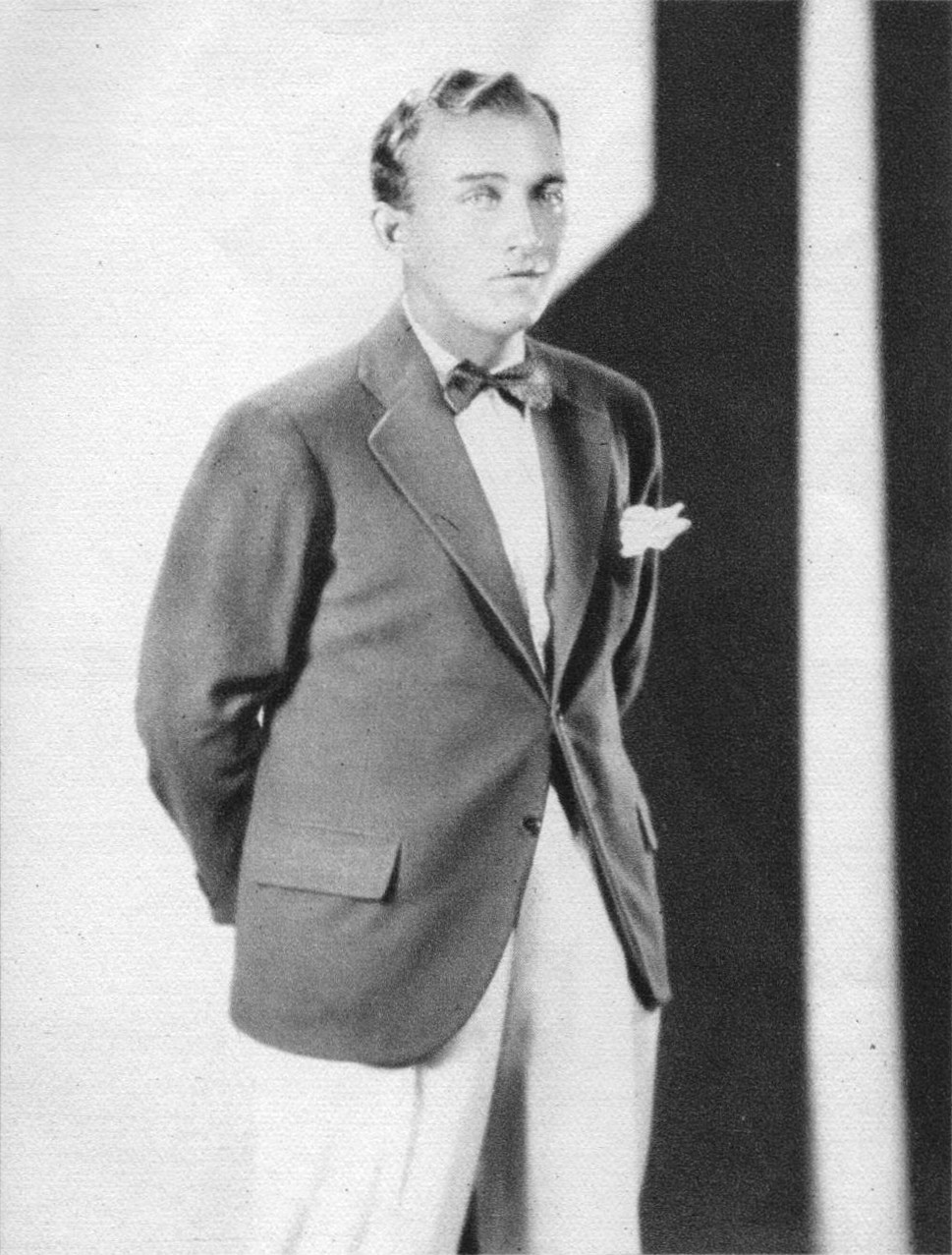
Columbia 1773-D – Bing Crosby – 1929

Bing Crosby in the early 1930s, as pictured in the Eveready Book of Radio Stars, c. 1932.

Old Time Blues has honored the iconic Bing Crosby before, with a look at his theme song “Where the Blue of the Night”, at which point I eulogized him quite thoroughly.  But now let us turn our attention two years earlier to Der Bingle’s first solo effort, while he was still just one of Paul Whiteman’s Rhythm Boys.

Born on May 3, 1903 in Tacoma, Washington as Harry Lillis Crosby, Bing got his nickname from a local girl, after a popular comic strip in the Spokane Spokesman-Review called The Bingville Bugle.  That is unless you’d prefer to take Bing’s own version of how he acquired the moniker: when he was “a mere broth of a lad,” he liked to play cops and robbers (or cowboys and Indians, by another account), and carried around a pair of toy six-guns all the time, saying “bing! bing! bing!” in imitation of firing.  One way or the other, Crosby was inspired by Al Jolson to turn from binging to singing.  While he was in college at Gonzaga University, Bing joined a band of high school students, including Al Rinker, called the Musicaladers.  Later, Bing dropped out of college to go with Rinker south to California (he got the last laugh though, when Gonzaga U awarded him an honorary doctorate), where the duo cut their first record in 1926: “I’ve Got the Girl” and another unissued title with Don Clark’s Los Angeles Biltmore Hotel Orchestra (evidently before Earl Burtnett took over the gig), albeit recorded a bit too slow.  With help from Rinker’s big sister Mildred Bailey, the pair got their big break later that year when they were hired by Paul Whiteman to sing—with the addition of singer and songwriter Harry Barris—as the Rhythm Boys.  Though the Rhythm Boys made several records of their own, Bing didn’t make his solo recording debut until 1929.  Crosby remained with Whiteman’s troupe, recording for Victor and Columbia, until 1930; the band had traveled to California to make their blockbuster motion picture King of Jazz, and the Rhythm boys decided to stick around afterward to try and make it big in Hollywood.  They made one record with Gus Arnheim’s Cocoanut Grove Orchestra for Victor—”Them There Eyes”—but parted ways thereafter, so Bing embarked upon his solo career in earnest.  He continued to sing with Arnheim’s orchestra until 1931, when he signed with Brunswick.  He continued to record for Brunswick until producer and manager Jack Kapp “poached” him for his new Decca label in 1934.  The rest (as they so often say) is history, Bing continued to skyrocket to stardom through the 1930s and 1940s, securing his position as one of pop-culture’s first “superstars,” which he maintained until his death on October 14, 1977.

Columbia 1773-D was recorded on March 14, 1929 in New York City.  It is Bing Crosby’s first solo record, though many more preceded it with Bing taking a secondary role.  Bing is backed by Matty Malneck on violin, Roy Bargy on piano, and the seldom heard Ed “Snoozer” Quinn on guitar.

First up, Bing sings the charming Jo Trent and Louis Alter composition “My Kinda Love”, delivering a performance quite a bit jazzier than he would later become known for.

My Kinda Love, recorded March 14, 1929 by Bing Crosby.

He backs it up with “Till We Meet”, another fine performance.  You may note that Bing in these earlier days tended to sing in a higher register than in his “crooner” days.

Till We Meet, recorded March 14, 1929 by Bing Crosby.